
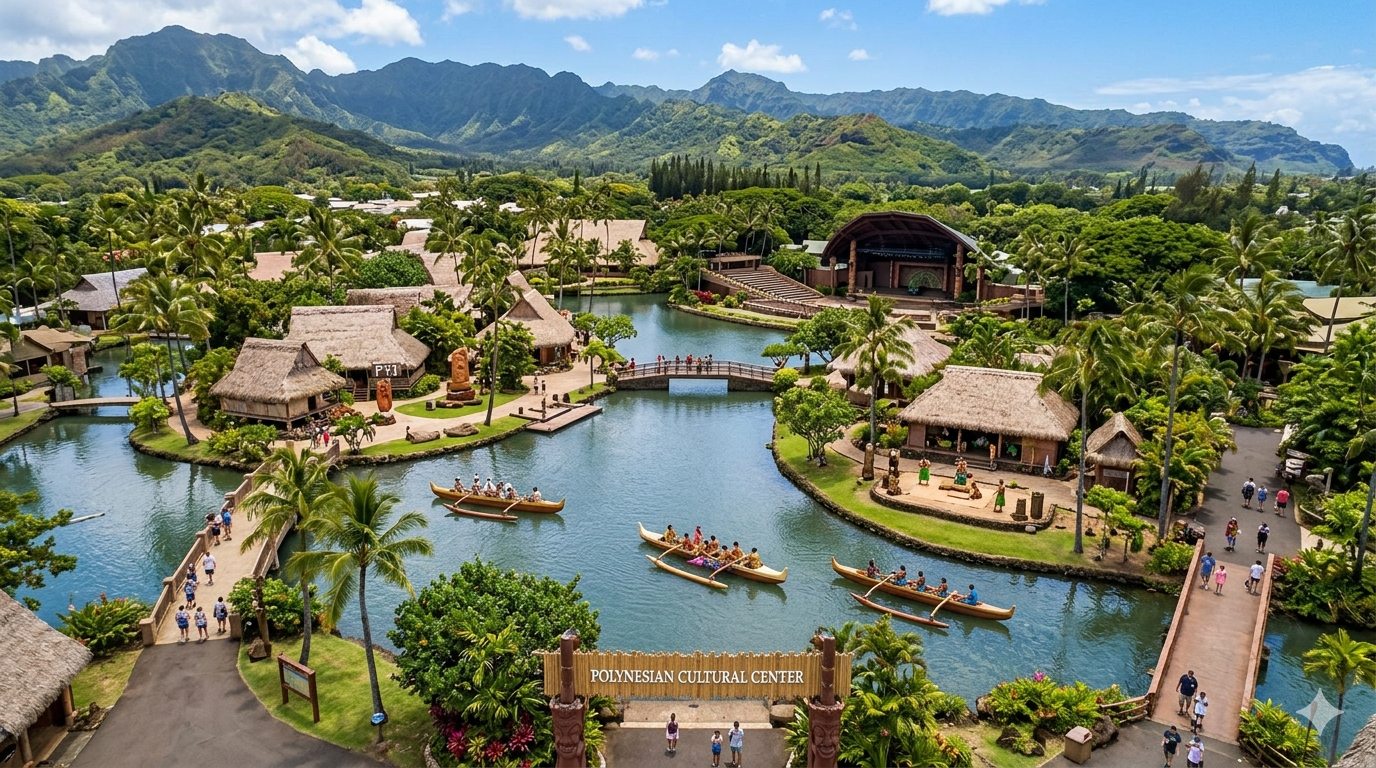
Polynesian Cultural Center Oahu: Villages, Luau and Show Guide
The Polynesian Cultural Center is in Laie, on Oahu’s North Shore.
It’s big. Bigger than most people expect the first time they see it.
You don’t really “drop in” here. Once you’re inside, you’re kind of in it for a while.
Polynesian Cultural Center Oahu: Villages, Luau and Show Guide
The Polynesian Cultural Center is one of those places on Oahu that sounds easy to explain, but feels much bigger once you actually get there.
On paper, it is a cultural attraction in Lāʻie, on the North Shore of Oahu. In practice, it is more of a full afternoon and evening experience. You walk through different island villages, watch live demonstrations, listen to music, see dances, try hands-on activities, eat, take breaks by the lagoon, and, if your ticket includes it, end the night with one of the biggest shows on the island.
It is not really the kind of place you squeeze in quickly between two beach stops. You can technically visit for only part of the day, but the experience makes more sense when you give it time.
The center covers 42 acres and represents six Polynesian island cultures: Hawaiʻi, Samoa, Tonga, Fiji, Tahiti, and Aotearoa, also known as New Zealand. Each village has its own presentations, personality, rhythm, and style, which is what makes the visit more interesting than a regular museum-style attraction.
That said, it is also important to know what you are getting. The Polynesian Cultural Center is organized, polished, and built for visitors. It is not a hidden local spot, and it is not trying to be one. But within that structure, there are still a lot of genuine moments: a presenter explaining something with pride, kids laughing during a drum demonstration, people slowing down by the lagoon, or a performance that suddenly feels more emotional than expected.
If you are visiting Oahu and want something beyond beaches, hikes, shopping, and scenic lookouts, the Polynesian Cultural Center is one of the most complete cultural experiences on the island.
What Is the Polynesian Cultural Center?
The Polynesian Cultural Center, often called PCC, is a cultural attraction and living museum in Lāʻie. It was created to share the traditions of Polynesian island cultures through performances, storytelling, food, music, demonstrations, and interactive experiences.
The main area is the Island Villages. Instead of walking through one general exhibit about Polynesia, you move from village to village, with each one focused on a different island culture.
In the Hawaiʻi village, you may learn about hula, games, language, and traditions connected to the land. In Samoa, you might see fire-making, coconut husking, climbing, cooking, and a very lively presentation. Tonga usually brings drums and audience participation. Fiji, Tahiti, and Aotearoa each add their own style, from dance and music to carving, ceremony, and storytelling.
That variety is what makes PCC work for different types of visitors. Families usually like the interactive parts. Couples can turn it into a slower afternoon-to-evening plan. First-time visitors to Hawaii can use it as a way to understand more of the Pacific beyond just Oahu.
It is also a good reminder that “Polynesian culture” is not one single thing. The villages are connected, but they are not identical. Each one has its own language, traditions, pace, and way of telling stories.
The Six Island Villages
The six Island Villages are the heart of the Polynesian Cultural Center: Hawaiʻi, Samoa, Tonga, Fiji, Tahiti, and Aotearoa.
This is the part of the day where you will probably do the most walking, stopping, watching, and deciding what to prioritize. There are scheduled presentations throughout the afternoon, but you do not need to treat the day like a strict checklist.
Actually, trying to see everything perfectly can make the visit feel more stressful than it needs to be.
A better approach is to check the schedule when you arrive, choose a few presentations you really care about, and leave some room to wander. Sometimes the best stop is not the one you planned. You may hear drums from one direction, see a crowd gathering in another village, or pass by just as a demonstration is starting.
If you are visiting with kids or people who get tired easily, prioritize the more interactive villages first. Samoa and Tonga are usually good choices because they tend to be energetic, funny, and easier to follow even if you do not know much about the culture beforehand.
Hawaiʻi Village
The Hawaiʻi village is a natural place to begin because it connects directly to the island you are visiting.
This area usually focuses on Hawaiian traditions, storytelling, hula, games, music, and the relationship between the Hawaiian people and the land. It helps put the rest of your Oahu trip into better context, especially if most of your itinerary is beaches, hikes, restaurants, and scenic drives.
What makes this stop valuable is that it reminds you that Hawaiian culture is not just something performed for tourists. It is tied to language, family, food, music, navigation, land, and everyday life.
For first-time visitors, the Hawaiʻi village can make small things around the island feel more meaningful afterward — words you hear, songs you notice, gestures in performances, or even the way certain places are talked about.
It may not always be the loudest or most dramatic village, but it is one of the most important for understanding where you actually are.
Samoa Village
For many visitors, Samoa ends up being one of the easiest villages to enjoy.
It is usually lively, funny, and full of movement. The demonstrations often include coconut husking, fire-making, climbing, cooking, and storytelling. Even if you only planned to stop for a few minutes, this is the kind of village where you may end up staying longer.
The presenters tend to make the experience feel approachable. There is humor, personality, and enough action to keep people engaged, even if they arrived knowing almost nothing about Samoa.
This is also one of the best examples of what PCC does well. It teaches culture without making it feel like a lecture. You are learning, but you are also laughing, watching, reacting, and getting pulled into the rhythm of the presentation.
If you are short on time and need to prioritize, Samoa is one of the villages I would be careful not to miss.
Tonga Village
The Tonga village brings drums, rhythm, and audience participation into the day.
You may hear this village before you fully see it. The sound of the drums has a way of pulling people in, and the presentations are usually playful and interactive.
This is a good stop for families, groups, and anyone who likes a more energetic atmosphere. Even if you are shy and have no intention of participating, it is still fun to watch other visitors get pulled into the performance.
Tonga also helps break up the slower parts of the day. After walking between villages and listening to cultural explanations, the drums and humor bring the energy back up.
It is a reminder that culture is not always something you quietly observe. Sometimes it is something you feel through sound, movement, laughter, and participation.
Fiji Village
The Fiji village usually has a different pace, and that is part of why it is worth slowing down for.
It often highlights craftsmanship, community, ceremony, warrior traditions, music, and storytelling. Compared with Samoa or Tonga, it may feel a little less loud or instantly attention-grabbing, but it adds an important layer to the overall visit.
This is the kind of stop where you get more out of it if you are not rushing. Pay attention to the details, the explanations, and the way traditions are connected to village life, family, and community.
Not every part of PCC needs to be big and high-energy. Fiji is a good reminder that some of the more interesting moments are quieter.
If your goal is only to chase the most entertaining presentations, you might move through this village quickly. But if you want a fuller sense of the different island cultures, it is worth giving Fiji a real stop.
Tahiti Village
Tahiti brings a brighter, more expressive energy to the visit.
This village is often associated with dance, rhythm, flowers, music, fishing, and celebration. If you enjoy live performance, this is likely one of the stops you will appreciate most.
The dance and movement here feel different from what you see in the other villages. That contrast is part of what makes the village experience interesting. You are not just seeing the same type of performance repeated six times with different names. Each place has its own style.
The visual details also stand out: flowers, costumes, movement, and music all give the area a more vibrant feeling.
Tahiti is a good stop for visitors who like performance, color, and cultural expression through dance rather than only spoken explanation.
Aotearoa Village
Aotearoa, or New Zealand, introduces visitors to Māori culture.
This is one of the most visually distinct villages at the Polynesian Cultural Center. Depending on the day and schedule, you may see carved meeting houses, song, dance, family traditions, and the haka, one of the most recognizable Māori cultural expressions.
The carved details, group performances, and storytelling give this village a different mood from the others. It feels strong, symbolic, and deeply tied to identity and tradition.
Aotearoa is especially interesting if you like learning how culture is passed down through generations. The performances and explanations often make it easier to understand how family, ancestry, language, and ceremony fit together.
By the time you reach this village, it becomes clearer why PCC works better when you do not rush it. Each village adds something different. If you only skim through, the whole experience can start to blur together.
Canoe Rides and the Lagoon
One of the nicest parts of the Polynesian Cultural Center is the lagoon that runs through the property.
After walking between villages, the water, bridges, canoes, and landscaping give the center a calmer feel. It helps break up the day and makes the property feel more open, especially when there are a lot of visitors around.
Depending on your ticket and timing, you may be able to ride a canoe through the lagoon or watch canoe-based performances. The center also features Huki: A Canoe Experience, a canoe pageant with music, dance, and cultural storytelling performed on double-hull canoes.
This is a good moment to slow down, take photos, and let the day breathe a little.
That may sound like a small thing, but PCC can feel like a lot if you try to move from presentation to presentation without stopping. The lagoon area gives you a natural pause between the more active parts of the visit.
The Aliʻi Lūʻau
The Aliʻi Lūʻau is one of the most popular dinner experiences at the Polynesian Cultural Center.
It is designed as a Hawaiian feast with music, hula, cultural presentation, and island-style food. Traditional options often include dishes like kālua pork and other local favorites.
If this is your first time attending a lūʻau on Oahu, doing it here can make sense because it fits naturally into the rest of the day. You spend the afternoon exploring the villages, move into dinner, and then finish with the evening show if your package includes it.
That said, you do not have to book the lūʻau to enjoy the Polynesian Cultural Center.
Some visitors choose a package focused on the villages and the evening show. Others prefer the full dinner experience. The better choice depends on your budget, your schedule, and how much time you want to spend there.
If your priority is having a complete cultural dinner experience, the lūʻau is a strong option. If your main priority is the big performance, then make sure your package includes Hā: Breath of Life. For many visitors, that show is the part that makes the whole day feel complete.
Hā: Breath of Life Evening Show
Hā: Breath of Life is one of the main reasons many visitors choose a fuller ticket package.
This is not just a small add-on after dinner. It is a large evening performance with music, dance, fire, storytelling, special effects, and more than 100 Polynesian performers from across the Pacific.
Unlike the daytime village presentations, the evening show follows a story. That makes it easier to connect emotionally, even if you are not familiar with all the cultures being represented.
The show follows the symbolic journey of Mana and Lani, with themes of family, love, loss, tradition, and resilience. It is dramatic, colorful, and much bigger in scale than what you see during the afternoon.
The fire knife performance near the end is usually the part people talk about most afterward, and for good reason. But the show works best because it builds slowly. After spending the day learning about the villages, the evening performance feels more like a final chapter than a separate attraction.
If your budget allows, I would include the evening show. Without it, the visit can still be good, but it may feel a little unfinished.
How Much Time Do You Need?
The Polynesian Cultural Center is not a one-hour stop.
For most visitors, it works best as a half-day to full-day experience. The Island Villages alone can take several hours, especially if you want to watch presentations, try activities, take photos, eat, and move at a relaxed pace.
A practical plan looks something like this:
Arrive early in the afternoon.
Visit the villages without trying to rush every single stop.
Take a break around the lagoon or marketplace.
Have dinner if your package includes it.
Stay for Hā: Breath of Life in the evening.
If you are coming from Waikiki, remember that Lāʻie is on the North Shore side of the island. The drive can take around an hour or more depending on traffic, and it can feel longer if you are trying to fit too much into the same day.
For that reason, I would not treat PCC as a quick side stop. It is better to make it the main activity of the day.
This is especially true if you are traveling with kids, older guests, or anyone who does not enjoy being rushed. The visit is much more enjoyable when you have time to walk, sit, eat, and make it to the evening show without feeling like you are chasing the clock.
Is the Polynesian Cultural Center Touristy?
Yes, the Polynesian Cultural Center is touristy.
But that does not automatically make it bad.
It is a major visitor attraction with ticket packages, schedules, performances, gift shops, food options, and crowds on busy days. It is clearly designed to welcome tourists, and you should expect a polished experience rather than something informal or hidden.
The better question is whether it still feels worthwhile.
For many visitors, the answer is yes. PCC gives you an accessible way to learn about several Polynesian cultures in one place, and many of the presenters have real connections to the islands they represent.
The experience is structured, but that structure is also what makes it easy for visitors to understand. You are not left wandering around wondering what to look at or what things mean. The presentations, signs, demonstrations, and performances guide you through the day.
If you dislike organized attractions, large groups, or scheduled shows, PCC may not be your favorite thing on Oahu. But if you are curious about culture and want something more meaningful than another beach day, it can be very worth it.
Go in knowing what it is: a polished cultural attraction made for visitors, with plenty of genuine moments inside that format.
Who Might Not Love It?
The Polynesian Cultural Center is a strong experience, but it is not the perfect fit for everyone.
If you want a quiet, independent, non-touristy day, this probably is not the place. The center is organized, popular, and built around scheduled presentations. You will see crowds, groups, and plenty of other visitors.
It may also feel like too much if you are trying to squeeze it into an already packed North Shore itinerary. PCC works better when you let it be the main plan, not something you force between beaches, food trucks, hikes, and sunset stops.
Budget is another thing to consider. Depending on the package you choose, the visit can become one of the more expensive activities on your trip. If you only have limited time or money, think about whether you care most about the villages, the lūʻau, the evening show, or the full experience.
For travelers who enjoy culture, performances, and structured activities, it is usually worth it. For travelers who only want beaches and spontaneous exploring, it may feel too planned.
Tips for Visiting the Polynesian Cultural Center
Wear comfortable shoes. The property is large, and you will probably walk more than you expect.
Arrive earlier than you think you need to. The day feels much better when you are not rushing from one village to another.
Check the current hours before going. PCC is not open every day, and schedules can change around holidays, seasons, or special events.
Prioritize the evening show if your budget allows. If you are already making the drive to Lāʻie, Hā: Breath of Life usually makes the visit feel more complete.
Do not overpack the day. Trying to combine PCC with too many North Shore stops can make everything feel rushed. If you want to add something nearby, keep it simple.
Give yourself time around the lagoon. It is a good place to pause, take photos, and reset between presentations.
If you are visiting with children, start with the more interactive villages. Samoa and Tonga are usually good choices for keeping the energy up.
If you are visiting as a couple, consider making it an afternoon-to-evening plan. The experience feels more complete when you move from the villages into dinner and then the show.
Bring curiosity. The best moments happen when you ask questions, listen to the presenters, and give the experience time to unfold.
Nearby Places to Visit
Because the Polynesian Cultural Center is located in Lāʻie, it pairs naturally with a slower North Shore day.
Nearby, you can visit local beaches, stop for food along Kamehameha Highway, or continue toward Kahuku, Turtle Bay, or Haleiwa depending on your plans.
If you are staying in Waikiki, this side of Oahu feels very different. It is quieter, more spacious, and less dense than the resort areas on the south shore. That contrast is part of what makes the drive worth it.
For guests staying near Turtle Bay, Kahuku, or Haleiwa, PCC is especially convenient. You can visit without spending as much time in traffic, which makes it easier to enjoy the afternoon and evening without feeling exhausted before you even arrive.
If you want to keep the day relaxed, avoid planning a packed North Shore itinerary around PCC. Choose one or two nearby stops, leave room for traffic, and let the Polynesian Cultural Center be the main experience of the day.
Final Thoughts
The Polynesian Cultural Center is one of the most complete cultural attractions on Oahu.
It is touristy, yes. It is also organized, polished, and clearly made for visitors. But when you give it enough time, it can be much more memorable than it looks from a simple ticket description.
The villages give you a broader understanding of Polynesia. The lagoon gives the day space to slow down. The lūʻau adds a dinner experience if you want the fuller package. And Hā: Breath of Life brings everything together in a way that feels bigger and more emotional than the daytime activities alone.
If you are looking for something beyond beaches and viewpoints, PCC is worth considering — especially if you are willing to make it the main plan of the day rather than a quick stop.
Highlights
- Six cultural villages spread across a large open area
- Mix of interactive and more relaxed presentations
- Samoa is often one of the most engaging villages
- Evening show that builds gradually
- Fire knife performance toward the end
- Central lagoon connecting different areas
- Full-day experience rather than a quick visit
- Located on Oahu’s North Shore in Laie

Where to Stay Near Polynesian Cultural Center

Staying near Polynesian Cultural Center makes it easier to enjoy the area with more comfort and less time spent driving.
Staying near the Polynesian Cultural Center makes it easier to enjoy one of Oahu’s most memorable cultural experiences with more comfort and less time spent driving.
Located in Laie, with vacation rentals in Kahuku just about 6 minutes away by car, the area gives guests an easy way to enjoy the Polynesian Cultural Center without needing a long drive back at the end of the day. After exploring the villages, dining options, and evening entertainment, staying nearby makes the whole experience feel more relaxed and easier to enjoy.
The surrounding area also adds more to the trip. Kahuku, Laie, and the nearby North Shore coastline offer a slower and more scenic side of Oahu, with beaches, local food spots, ocean views, and easy access to places like Turtle Bay and other North Shore favorites.
Staying here goes beyond simply choosing a place to stay. It’s about having a comfortable North Shore base close to one of Oahu’s most meaningful attractions. Our vacation rentals in Kahuku are fully equipped, offer ocean views, and provide a welcoming space to come back to after a day exploring the Polynesian Cultural Center and the surrounding area.